Cold case: a day in the life of a homicide detective

It was a rainy evening in northern suburbs of Melbourne when a man, settled in for a quiet night in his bungalow had his peace disturbed by the distinctive sound of glass breaking outside.

He was an older man who was disconnected from society, whose life had been interrupted by a group of teenagers in the street who were intent on having their own street party, drunkenly smashing their empty bottles and talking loudly. The man, upset that he had been disturbed by these rowdy teens who had no regard for those living in the quiet suburban street, decided to take matters into his own hands and confront them. Opening the door to his quaint home, he strode outside to where the youths were. Politely he asked them to keep it quiet, which in turn only angered the inebriated teens. In an instant, they produced a knife, jumped on him and brutally stabbed the man to death in his own street, a quiet street that would now be forever tainted in blood, long after the crime had taken place.

The rain was not homicide Detective Dale McQualter’s or Victoria Police’s best friend that night, hindering their investigation by washing away much of their evidence and making it difficult to identify the offenders (the first 72 hours are the most crucial times after a murder has taken place). Still they refused to give up and after much hard work and persistence, they managed to arrest the offender who was charged and convicted with murder.

Although the victim did not have many material possessions, he did have something far more valuable – his family. His distressed mother and brother (who he was estranged from at the time of his death) attended every single day of the three-week murder trial.

Dale says it was a shocking case for him.

“Because it was quite horrific circumstances to do something that one of us might do any night of the week, walk out the front of your door and say hey shut up. And then you’re dead in the middle of the road.”

For him, the lesser known murders were the most satisfying ones to solve as it is not all about finding the perpetrators, it becomes more personal and about helping the victims grieving family.

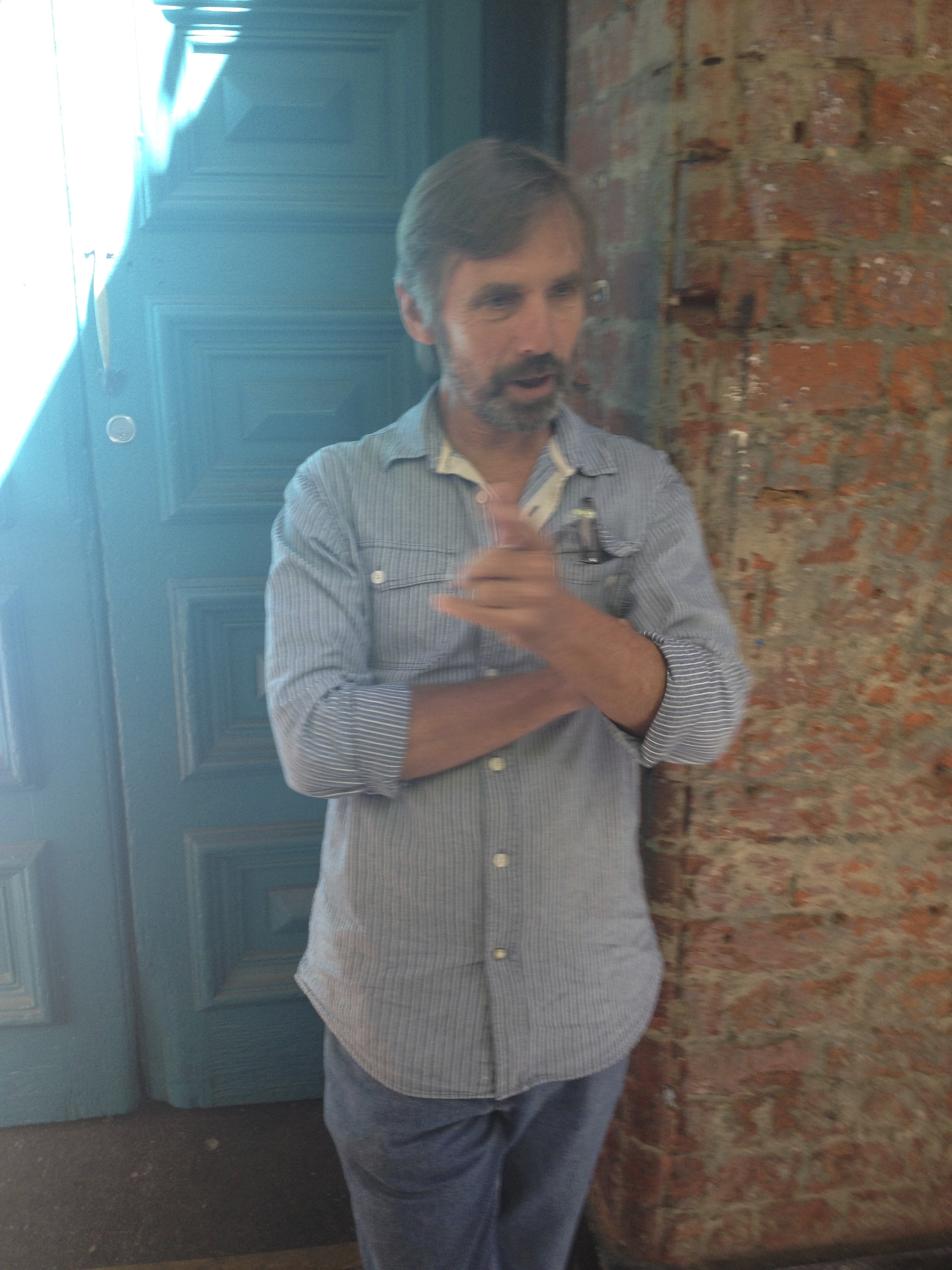
“If someone has a profile, the media are all over it and it becomes front page news. But often there’s homicides every second day of the week and it’s those other ones that don’t get any media attention that are probably the most satisfying in the end,” he said, with a gentle smile which gives warmth to his intense brown eyes, framed by dark framed glasses and a full beard and mustache. He is of a slim build with short brown hair and dressed impeccably, in a navy suit.

Born in Bendigo in 1974, Dale is the eldest of six children. After attending Catholic Primary School and Catholic College in Bendigo, he spent the next three years travelling and doing odd jobs while trying to work out what he wanted to do with his life.

At the age of 21, he spotted an advertisement for Victoria Police and decided to apply, despite many people telling him that it was too hard to get into. He proved them wrong, and was successful in his first attempt. He spent the next five months doing the required training at the Glen Waverley police academy, which included legal, physical and weapons training. After graduating, he spent time at the Flinders Street, Fitzroy, Richmond and Collingwood police stations where he did general police duties and some low level undercover work, mainly involving drug related issues.

After three and a half years working as a police officer, which included doing some detective work in the Crime Investigation Unit, he decided that he wanted to become a homicide detective. After attending a formal interview, he was successful and was fortunate to be recruited to the Purana taskforce, an arm of the homicide unit responsible for investigating the Melbourne gangland murders.

His involvement in the taskforce included investigating the murder of Mario Condello, who was murdered in front of his Brighton home in 2004 and whose death still remains unsolved. He had the honour of interviewing Carl Williams (who was a prime suspect due to Condello’s plot to murder him) who he described as “charismatic” and someone who thrived on media attention.

“My view is that they live in a little bit of a TV sort of scenario so they follow Tony Soprano and the way he lives his life,” he says, laughing.

When Tony Mokbel fled to Greece in 2006, Dale was involved in assisting with locating and apprehending him. Although he said he didn’t meet or interview Mokbel, he says the operation was handled quietly and delicately to ensure that he wasn’t tipped off. One of the detectives even kept a packed suitcase in the office, ready to dash to the airport and jump on the next plane to Greece if necessary.

The bloodiest crime scene Dale said he walked into was one evening when he was called to a house where two friends had a verbal altercation over dinner, which quickly turned deadly, ending with a body lying on the floor in the dining room. The scene was not a pretty sight, as the victim had been stabbed so many times that it “was as though all of the blood had been drained out of him.” 

After seven years as a homicide detective, involving long hours and missing many family events due to being called in to work, he decided to change career and to study law at Monash University. He married his wife Emily in 2008 and they now have a one year old son, Alfie. 

Despite his assertion that she was fine with his job as she did not know anything different, Emily says she is “pretty relieved” that he is now a lawyer and she no longer “has to worry about his safety”. Emily recalls a particular time when Dale was called out to find an offender who had committed a violent crime and was torn between wanting the criminal to be apprehended for public safety and feeling very uncomfortable and concerned that her husband might be the one who finds him and may be in immediate danger.

Emily describes him as “fiercely loyal” and a “wonderful father” and says that beneath the serious, poker-face exterior perfected from his many years questioning some of Victoria’s most dangerous criminals, belies a more playful and “goofy” personality, which is especially prevalent now he is a father.

Despite his career change, Dale says his time on the police force has given him some valuable skills that serve him well, most importantly his people skills, observing that many of his younger colleagues have struggled with dealing with aggressive or difficult clients. He has also kept up with his fitness, and rides his bike to work everyday.

Victoria Police’s motto is “Uphold the Right”, so perhaps in Dale’s case his new motto should be “Uphold the Change.”
Other things the poor (and the media) shouldn’t do: listen to Joe Hockey

Another week and another embarrassing blunder for the Federal Government. This time from Treasurer Joe Hockey who put his foot firmly in his mouth when trying to justify an increase in the fuel levy with “the poorest people either don’t have cars or actually don’t drive very far in many cases”. As expected, the outrage in the public and the media was huge and he was forced to backflip on his comments.

Was the media justified in their attacks on Mr Hockey? Absolutely. The Treasurer is in the public eye and if he can dish it out, he should be able to take it being thrown back at him. Fairfax in particular were scathing of how he handled the debacle, possibly because Mr Hockey is suing them for defamation over an article they published about him in May. Other media organisations, such as the ABC did a “Fact Check” on his comment, contradicting his remarks and embarrassing him even further.

Twitter exploded with the hashtag #OtherThingsThePoorDontDo with many unhappy voters composing amusing tweets and photos ridiculing the Treasurer’s poor choice of words. Many also found his words hard to swallow given he has a taxpayer-funded government car.

Other politicians also tore into the Treasurer and when you have the Prime Minister refusing to support your comments, it’s time to sack your media advisers. And when Peter Reith (a former Howard government minister who was entangled in the ‘children overboard’ scandal) is critical of how he has handled the backlash, it’s time to issue an apology.

However taking 48 hours to publicly apologise was not looked upon favourably, with the media taking a “too little, too late” approach and questioning how genuine his apology was. Fairfax in particular ran a poll asking readers if they accepted his apology, with 86% voting “No”.

Either way, Mr Hockey is in desperate need of overhauling his image as he is regularly portrayed in the media as being “smug”, “arrogant” and his public persona has been likened to Ebenezer Scrooge. In a time when his approval rating is low, maybe he should speak to his colleague Julie Bishop about how to successfully reinvent yourself in the eyes of the media. The best place to start would be to spend some time with these so-called “poor” people, or otherwise face life in the political wilderness after the next federal election.

Trial by media: Judge, jury and executioner

Social media is a powerful tool, capable of capturing photos and videos that can be uploaded to Twitter, Facebook or YouTube instantly making someone a celebrity or in the case of Sydney woman Karen Bailey, a villain. Ms Bailey who was recently recorded on a train racially abusing passengers, has suffered vicious backlash from the public and media, proof that the media can be more effective and powerful at playing judge, jury and executioner than the courts.

Ms Bailey was given a 12-month good behaviour bond (arguably a light sentence), instead of the maximum $500 fine for her on-camera rant, which only strengthens the case of trial by media. I believe that the magistrate was aware of the public humiliation from the viral publication of the video, and decided that she had suffered enough. In the aftermath of the incident, her father has spoken publicly about her struggle to move on with her life. Her Linkedin profile (which was published by the media as a means of identifying her real name), which boasted of her previous occupations working as a secretary for some of the top law firms in the country has been deleted and she has disappeared from public sight. She was unemployed at the time of her tirade and unfortunately her outburst (which can still be found on YouTube) is unlikely to endear her to many potential employers.

So why does the media report and publish these videos? I argue that they are aware that the courts will give them the equivalent of a slap on the wrist and chooses to give out its own brand of justice, with the reasoning of civic responsibility (or the equivalent of teaching them a lesson). The original video on YouTube has over one million views and over 7,000 comments. What is interesting though, is that while the media will publicly shame racist offenders, there is very little emphasis on what can be done to eliminate it. One journalist even commented that reporting on this incident can have the opposite effect.

The media and the legal system have a turbulent relationship. If the courts make a wrong decision, the press will hold them accountable. Although the courts are effective at punishing offenders, they will continually be outdone by the media, who are more accessible to the public, have a greater audience and will continue to name and shame racist behaviour. This is of some concern to someone like Karen Bailey who would probably prefer to be forgotten.

A study on how to report on trauma – the tragic story of Christopher Lane

The random drive-by shooting of Christopher Lane as he was out jogging in Duncan, Oklahoma deeply affected many people, including his American girlfriend Sarah Harper, his parents and his baseball teammates. Most major television networks, radio shows and print and online newspapers chose to cover this story due to the shocking nature of how he was killed and because he was living overseas in the United States, a country notorious for its relaxed gun laws.

Channel 10 U.S. correspondent Lachlan Kennedy’s story began with vision of Christopher’s family and friends huddled together on a baseball field in Melbourne with the voiceover mentioning the fact that he was “half a world away” when he died. This report focused on providing background information on Christopher Lane, portraying him as a talented baseball player and an average Australian male. Mr Kennedy also broadcast many quotes and shots from Christopher’s parents, who were visibly upset at his death and, while it looks like it may be an intrusion of privacy by media, it is likely that they agreed to talk to the media to tell viewers and the community what it is like to lose a beloved son.

There was also many photos of Christopher Lane and his girlfriend Sarah Harper shown throughout this report, but it is not known whether these photos were provided by friends and family or whether the journalist went looking for them through social media.

The journalist did however look through Ms Harper’s Facebook page and is shown scrolling through it and singling out a tribute she had left on there for Christopher. While this was posted on a public social media page so anyone could view it, some viewers might have been a little uncomfortable with seeing it widely broadcasted on a national television news story as many people may think that she should be left alone to grieve in peace.

The report concludes with Mr Kennedy commenting that Christopher was considering a career in real estate that “could have brought him back to Melbourne” and if it did, he may still be alive today.

Mr Kennedy said that covering the press conference of the Chris’ parents was “incredibly powerful. They told not just Australian but world viewers (because this crime has received global coverage) how special Chris was. What kind of young man he was. It sounds cynical, but in my experience, viewers will often switch off, or forget crime stories unless there is an emotional element to capture their attention. Unless they are shown why they should care about this incident. However, emotion should not overshadow facts”.

He also said that speaking with the Lane family was “without question the most difficult part of being a journalist, but asking for comment from the next-of-kin, is also one of the most crucial.  Our stories should explain who the victim is. Why they will be missed, what time of person they were, how the heinous crime will impact their family”. Mr Kennedy has also interviewed Sarah Harper and said it was interesting that “she refused to speak to American media but was willing to talk to us” and that as part of the grieving process she will often retweet or post on Facebook the Australian media coverage of the trial. He also says “I’ve thought about Chris’s death a lot in the past 9 months. He was a young bloke who moved to the USA to pursue his dream of playing professional baseball. In some respects, I’m doing the same, moving here to explore an incredibly journalistic opportunity. The fact he was gunned down, in a very very quiet and peaceful part of America, as he went for a run, is disturbing. The case often crosses my mind when I go for a jog. I wouldn’t characterise my experience as traumatic however. I have interviewed Jennifer Luna, the mother of the accused shooter Chancey, several times. I am torn between my personal anger for what her son allegedly did … and my sympathy for her… the sheer grief and sense of loss she is suffering is evident. Jennifer’s partner and other son passed away last year. Now it’s a possibility she’ll lose Chancey to a life behind bars. She’s a professional carer who has worked hard to provide for her family. My approach is to always be professional, polite, respect her wishes and remember she too is also a victim of this senseless crime”. 

In contrast to the television news reports, Fairfax U.S. correspondent Nick O’Malley focused on writing about the three teenagers who shot and killed Christopher Lane. In particular there was a large focus on how they came to choose him as “our target” and why they shot him, because “they wanted to see someone die”. The offenders are portrayed as a bunch of bored teenagers looking for a thrill and it is the first article to list their names and ages, with one as young as 15 years old. Through the use of an interview with the local police chief, readers get a real sense of their motives for the shooting from his interrogation of the three offenders, where all of them were disrespectful except for one who is described as “unemotional”.

Police chief Danny Ford also describes how he was feeling, saying “I hate it for thegirlfriend, I hate it for the parents, being so far away,” and also admitted that although he was not shocked by the crime (due to his job), the whole town was. This showed how a traumatic incident can affect not only the family, but also a small town. Mr O’Malley also included quotes from Ms Harper, to describe how she was feeling about her partner’s “senseless” death, a word used in many other reports to describe this incident. Many people affected by this crime also posted condolence messages on Facebook, including Ms Harper showing that social media can be another outlet to express grief when they are not ready to speak directly with the media. Readers also get a sense of what the parents of the teenagers was feeling, with two of them describing their sons as “innocent” even though they had confessed to the crime. This shows that they too are affected by the incident and are potentially in denial about the shocking nature of their son’s crimes.

Radio stations instead chose to interview some of the closest people to the victim and the perpetrators. Neil Mitchell from 3AW spoke to Ms Harper, beginning the interview by gently offering his condolences to her. Mr Mitchell uses this gentle tone throughout the interview and it is obvious that he chooses his questions carefully, most likely because the matter is still very raw and he does not want to upset her. Ms Harper herself did not talk very much and clearly was trying to process the news. While some might argue she should not have been disturbed for an interview so soon after her partner’s death, it does sound as though she wanted to talk, even if only to say thank you to the Australian public for their support. Ms Harper also said “it was a real shock to everybody,” when speaking of the reaction of the town of Duncan, a small town which had a low crime rate. Mr Mitchell also used the opportunity to showcase the differences in gun laws between the United States and Australia and even suggested that if Christopher had graduated from college there and returned home, then he may not have been killed. He ended the interview by asking if there is anything he could do to help. However it was clear that all Ms Harper needed was time and space from the media to grieve.

The media does have to be careful when reporting on traumatic incidents such as a shooting for fear of upsetting or intruding on the affected families or printing details about the person who committed the crime and affecting their upcoming trial.

In the case of the Christopher Lane shooting, it seems as though the media were quite respectful and were therefore able to get access to the family. There were some minor aspects of the reports which some people might have been uncomfortable with. In particular the publishing of the names, photos and ages of the offenders, given that they are all under 18. However, given that according to the district attorney they are to be tried as adults it would be seen as acceptable that their details were published. The other aspect is journalists combing through social media of the family which is a contentious issue as it could be seen as an invasion of privacy.

However, Facebook is a public domain on the internet so it could be argued that the media did nothing wrong. From this incident, as a journalist it is important to always remember that although you may have dealt with reporting traumatic stories on a regular basis, for the people you approach it is not ordinary.

In the Christopher Lane case, a whole town can be heavily affected by not only by the incident, but by how to choose to report it so the need to respect privacy and to above all be compassionate is paramount in all forms of trauma reporting.

Mr Kennedy in particular believes that: “Don’t be afraid to talk about what you’ve experienced. What you’ve seen and what you’ve heard. And don’t hesitate to say NO if you feel a particular assignment will cause emotional harm. Also, be mindful of the stress and trauma your interview talent may be experiencing. I feel our job is to get the facts, not bait people. And you’ll probably be able to sleep better.”

The Dart Centre Asia Pacific’s tips for journalists when reporting on trauma

  • You are going to be affected by reporting with trauma.
  • The best way to deal with trauma reporting is to talk about it. Don’t bottle up your emotions.
  • If you are first on the scene for a story, it can be difficult to deal with and you can become traumatised.
  • Reporting on a traumatic event can affect you more than you would think, it can build over time and you can have a delayed reaction to it – nightmares and agitation can be symptoms of trauma.
  • You need to have a mental protection overcoat when reporting on traumatic incidents – be prepared and ready to talk to someone if necessary.
  • You can get hate mail and negative reactions for turning up to report on an accident, death or murder – remember you are just doing your job.
  • You can feel guilty for being a journalist in these situations instead of a paramedic.
  • There is a misconception that journalists don’t have feelings – the truth is they are just as vulnerable as anyone else in the community.
  • Cynicism is an unnecessary trait in trauma reporting.
  • ‘Death knocks’ can be seen an intrusions of privacy, however victims families do tend to talk to journalists in order to tell other what it is like to lose someone. Be respectful, gentle and polite.
  • Seek support from people at home (family and friends) and people in the office – colleagues will have gone through the same feelings as you.
  • A peer support program within the office is a good idea – the ABC does have such a program to assist their staff.
  • If you are a senior reporter, be proactive and act as a mentor to junior reporters – call or text to check on them.

Herald Sun pictorial editor and senior photographer Bruce Magilton’s Top 10 Tips for Photojournalists

Bruce Magilton

Bruce Magilton

  1. Get in close to the subject to take a photo (unless you need a background, you can take the “clutter” out).
  2. Never be late and always keep your phone with you – smartphones are great for taking photos.
  3. Warm up, adapt and try to grab the attention of the subject.
  4. Be careful of lighting and shadows – the light should always be behind you.
  5. Make the picture tell a story.
  6. Don’t be afraid to take the subject outside to take a photo.
  7. Ask the subject to lift their chin up.
  8. Ask the subject to write down their name for you – this eliminates any chance of you spelling their name incorrectly.
  9. If you do end up working with a professional photographer, make sure you have a good relationship with them so you can watch and learn from them (and never introduce them to your interview subject as “my photographer”).
  10. The photographer should always drive to a job.

Council to review charity bins

Roadside charity bins in Mernda have been removed by Whittlesea City Council due to incidents of illegal dumping and vandalism by residents.

The charities and business organisations were served with notices to comply by the Council after it received complaints that residents were dumping boxes, mattresses and bulky goods outside the old Mernda sale yards Whittlesea City Council North Ward councillor Ricky Kirkham said.

A review and report of all charity bins and locations in the municipality is also being prepared by Council.

“We aren’t anti-support of charities, it is more about supporting places where dumping is minimised,” Cr Kirkham said.

It has been a constant issue that has been occurring for months due to the bins being located in an isolated area, he said.

“There is an element of opportunism as there is not too much passive surveillance in the area so there is the issue of out-of-sight, out-of-mind,” Cr Kirkham said.

The aim of the report is to uphold the reputation of the area as clean and environmentally friendly and to support the bins that are in the best location for residents, Cr Kirkham said.

Southern Cross Recycling spokesman Karl Barabas said it was “disappointing” that Council had asked them to remove their bin from the site.

“Generally speaking, the sites are managed quite well,” he said.

“However, there were issues with items being placed beside the bin and not in the bin itself.”

Mr Barabas said he hopes that the report from Council would focus on educating residents on proper use of the bins as “the community didn’t respect it”.

City of Greater Dandenong senior media and communications coordinator Anya Murray said illegal dumping at charity bins was a widespread problem across all local councils.

“Our council has a Litter Prevention Officer and a Litter Action Taskforce which is made up 10 to 12 representatives from across the Council and was set up as a result of extra funding,” she said.

The Council also ran a “Neat Streets” campaign with Leader Newspapers over a period of eight months, which was effective.

“We also have CCTV cameras set up at charity bin sites, some are operational and some are not, to act as a deterrent,” Ms Murray said.

The report is expected to completed within the next two or three months.

Analysis of media coverage of Luke Batty

The recent death of Luke Batty at the hands of his father Greg Anderson has thrust the issue of family violence into the media. Although the coverage of this story was very intense and made the headlines nationally, the way various media outlets chose to report on the aftermath of this incident was quite varied whether it was on television, print/online or radio.

The Channel 7 report began with interviews with Luke’s schoolmates as well as showing footage of the oval where he died which appears to be no longer a place for playing sport, but a place to grieve and pay tribute to the “sports loving 11 year old who died at cricket practice”. There is also footage of Luke’s “grieving mother” Rosie Batty attending the shrine. This report quickly shifts from one of sadness towards blaming and focusing on the shortcomings of the police, along with showing clips from a press conference with Chief Commissioner Ken Lay. Journalist Chris Maher also says that Victoria Police “is asking itself some tough questions”. The story concludes on a softer tone with Rosie Batty admitting that “the police do the best they can, they are under-resourced”.

In comparison the Channel 9 report begins in almost the same way with footage of Luke’s friends marching around the oval and focuses on Rosie Batty attending the oval and with almost the exact same quotes from her as the Channel 7 report. Reporter Alexis Daish then becomes very critical of Victoria Police which is highlighted by not only the abrupt tone of her voice, but also by listing the previous incidents (accompanied with an computerised image of a police record) where Luke’s father had been arrested. The report concludes with one final attack on the police by commenting that “just 16 days before he brutally murdered his own son, police had the opportunity to arrest him, but didn’t”, along with footage of her standing outside the Frankston Magistrates’ Court, perhaps to convey that if he had been arrested, then he would have attended this court and potentially been put in jail and Luke would still be alive. Daish admitted that this was a “horrific story and one of the hardest I’ve had to do”.

The Channel 10, ABC Victoria and SBS reports seem to take a slightly different approach. While all three do mention the issues with Victoria Police’s system, they are much less scathing in the language they use with the word “glitch” used to describe the issue with their I.T. system. Channel 10’s story seemed to be more sympathetic to the issues that Luke’s father had even commenting that “Greg’s mental health had been deteriorating”, something that no other news report chose to mention.

In comparison ABC chose to describe Mr Anderson as someone who “terrorised his family for the past 10 years” thus depicting him as a monster. They also spoke to the Child Safety Commissioner which no other news station did, aside from the SBS who spoke to Save the Children Australia which makes both reports more about from family violence. Interestingly, all five news reports show either photos or video footage of Luke (perhaps intended to show how young and innocent he was) while not one photo is shown of Greg Anderson.

The print and online articles on this story seem to focus on one of three areas – Luke himself, his mother Rosie or the shortcomings of Victoria Police. The Age article by Nick Toscano preferred to focus on Luke and in particular on how much he loved sport and that “he loved bananas” symbolised by the balloons his classmates released in their tribute to him. Toscano said: “The reason that story didn’t have anything about the arrest warrants and police’s admission of error was because I had already covered that angle that morning for online”. He also said that if he was reporting for a different medium (such as radio or television) “the report would have prominently included police comments on warrants, which was the strongest news angle of the day. Broadcast reports are generally all-encompassing and condensed package reports that would include a number of different voices. That’s usually the same in print but for big stories like this we can flesh things out, if the editors choose, and run a package of news stories and colour pieces together across a page”.

The Herald Sun also heavily criticised Victoria Police, listing the dates of each of Greg Anderson’s offences. Interestingly it appears very little was done to attempt to arrest Mr Anderson during a period of nine months, which is perhaps best explained by Rosie Batty’s comment in the Channel 7 report that the police are under-resourced. In comparison another story in this newspaper takes a completely different approach, instead focussing on Rosie Batty and her “bravery” highlighted by using two connotations of the word “brave” in the first sentence of the article. Reporter Andrew Rule ignored the press conference and focused on the history of the family, perhaps to allow readers to further understand why Ms Batty chose to live close to Luke’s father.

The Australian also chose to focus on the history of the family and Rosie Batty. However this report is set out as a soft news, rather than a hard news story. Journalist Chip Le Grand chose to also examine the relationship between Luke and his father, with many quotes from Rosie confirming that “no one loved Luke more than Greg” and believing that it was not premeditated murder. Ms Batty is also described as “an average single mum”, to further highlight how this could happen to anyone.

Crikey chose to publish a brief opinion piece comparing the media coverage between the Herald Sun and The Age. In particular it was critical of both papers implying that Ms Batty needs privacy from the media, not to have a seven page spread in the paper reminding her of what she has lost. The publication also believed that both newspapers missed the point of this incident, domestic violence and challenges them to write an article with this intention with “if there’s any role for Melbourne’s tabloids over the days and weeks ahead in this tragedy, perhaps they could take up the baton”.

Radio chose a slightly different approach and instead focused on interviewing the key people involved in this issue.

The ABC had a phone interview with Chief Commissioner Ken Lay conducted by Dr Rebecca Huntley. This interview had a particular focus on the I.T. issues within the Victoria Police computer system and whether this could have been prevented if there was better funding to support the system. Commissioner Lay does admit “we have had troubles with our I.T. system for a decade or so” and does not back away from criticism that Victoria Police failed to upgrade their computer system. However he implies that it was a government funding issue and that “Government have made some investment available to us” to improve the system. Interestingly though when asked whether the fault in the computer system would have changed the outcome of the case, Commissioner Lay responds with, “I don’t think so”, implying that as Mr Anderson was difficult to track down, the outcome would have been the same. However Commissioner Lay ultimately admits that it’s “very hard to argue” that they let Luke down.

3AW instead chose to interview Rosie Batty (which was conducted by Neil Mitchell) and chose to highlight the prevalence of family violence, which Ms Batty states occurs in “one in three” families, showcasing how common it is in society. It becomes clear that Rosie sounds very tired and frustrated with dealing with the system when it comes to reporting the instances of violence, admitting it is “exhausting and unrelenting” insinuating that something needs to change in the system. She also admits that the “matter is raw” and that the reason she has spoken out was to hopefully become a voice for change. What is intriguing is that the interview focuses on what can be done to improve the system and Rosie is used as the face and voice in the hope of achieving this change.

Each of these reports seemed to focus on a particular aspect of this incident. The television reports seemed to be highly critical of Victoria Police with very little focus on Greg Anderson. What was most interesting is that the print medium seemed to spend more time examining Luke’s father, possibly because every television report showed photos and footage of Luke. The radio interviews seemed to be more supportive of Victoria Police despite the shortcomings in their system and appeared to ask what can be done to prevent family violence. In conclusion while each medium seemed to choose a different angle to report on this tragedy, the main message of each story was to highlight the prevalence of family violence and to ensure that this never happens again.